
Tech-celerate: How commercial real estate can keep pace with the world’s most advanced companies
As the commercial real estate sector sees a surge of AI businesses enter the market, the infrastructure, design, and building requirements of offices are being radically redefined. The workplace is no longer just a place to work; it is a platform for innovation where pioneers perform on the world’s stage.
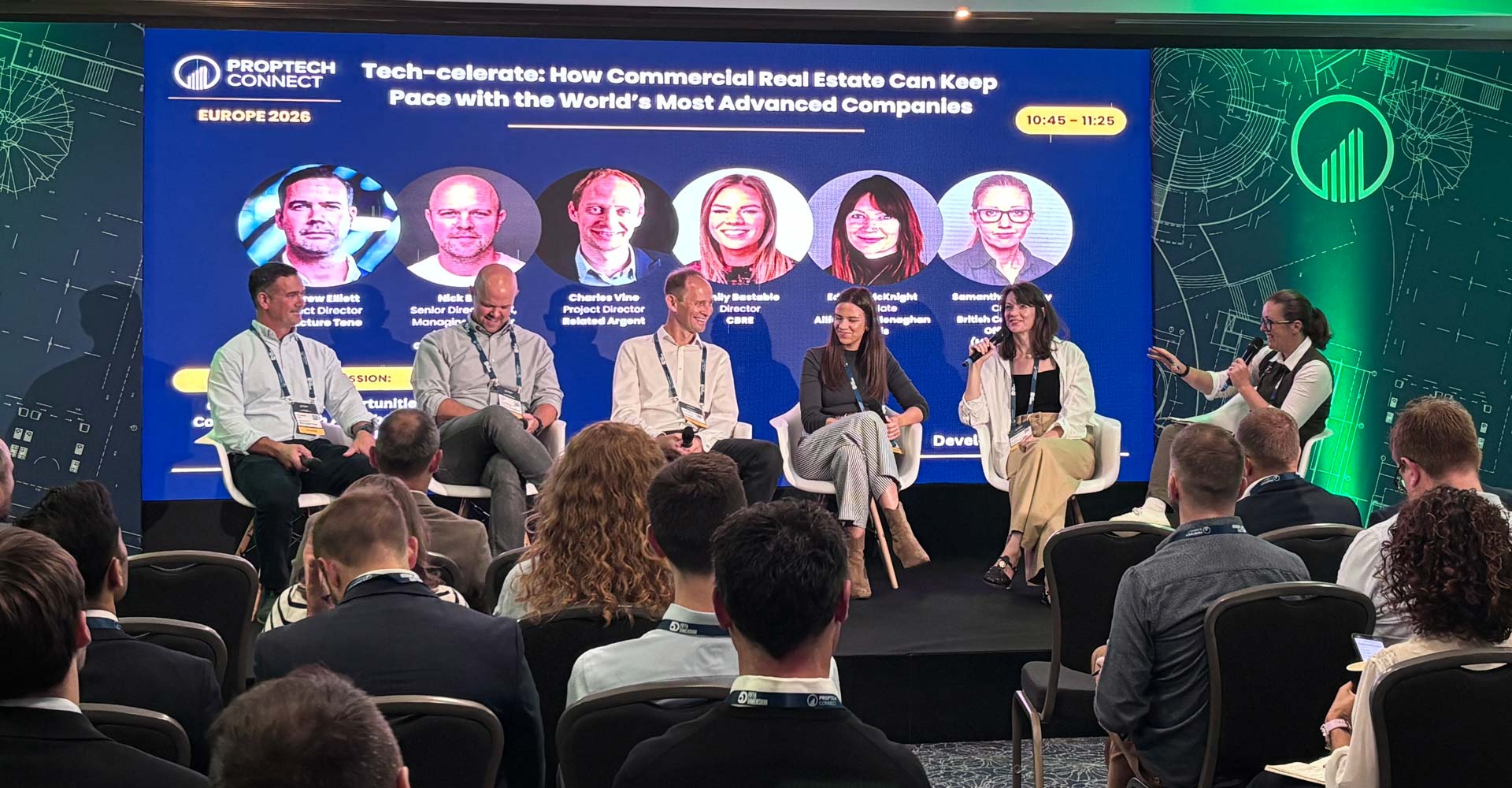
At this year’s PropTech Connect Europe conference in London, we brought together an expert panel of speakers to explore the needs of AI-native occupiers and how we can create best-in-class workplaces for these pioneering businesses.
Our panel of experts:
- Moderator: Sam McClary, CEO, British Council for Offices (BCO)
- Nick Barr, Senior Director of Global Workplace Innovation and Experience, Google DeepMind
- Emily Bastable, Director UK Research, CBRE
- Andy Elliott, Project Director, Structure Tone
- Edwina McKnight, Associate, Allford Hall Monaghan Morris (AHMM)
- Charles Vine, Project Director, RelatedArgent
Intrepidly entering the Intelligence Revolution
The conversation kicked off with Nick Barr from Google DeepMind providing some essential context. He framed the development of AI as the ‘Intelligence Revolution’ which, after the Industrial Revolution and Information Revolution, we are now at the very start of. From Nick’s perspective, the exciting next step for AI is taking it beyond the digital space and into the real world with ‘embodied AI’.
Nick’s real estate priorities for the future of AI include:
- Adaptability and flexibility
- Having the right services and infrastructure
- Suitable floor loading provision
- Generous floor to ceiling heights
Nick acknowledged that the tech industry is driven by the talent market, which pushes companies into major cities, but he wondered whether London has the right commercial and industrial stock to support the next era of the Intelligence Revolution.
Statistically speaking
CBRE’s Emily Bastable shared findings from her recent research which indicates that:
- Since 2015, AI occupiers have taken over 2.2 million square feet of office space in central London, with over 50% of that happening in the last two years.
- 2025 was seen as a ‘record year’, but the first half of 2026 has already exceeded 2025’s total for traditional office space and leases.
- There has been a 20% increase in flex-office transactions driven by AI businesses since 2024.
CBRE’s research into previous tech cycles and indicator markets such as San Francisco also helps them to make predictions. Their current projection is that we’ll see four million square feet of office take up by AI occupiers in central London by 2033.
Location, location, location
RelatedArgent’s Charles Vine believes that London provides a great economic ecosystem for AI businesses, whether as a start-up or an already established major player. It has talent, transport routes, and a host of cultural and educational institutions, as well as being part of the UK’s Golden Triangle. King’s Cross stands out as an exceptional location that benefits from all of these things, as well as thriving leisure and retail, making it well connected, interesting, and fun.
The only constant is change
For companies like Google DeepMind, things change rapidly: projects change month to month; if certain efforts aren’t making progress they will pivot in another direction. So, their spaces need to be adaptable. When it comes to building design, Nick Barr stated that if developers and building owners focus too much on metrics and efficiency, it can hinder flexibility – that can be a real constraint for an occupier at the frontier.
AHMM’s Edwina McKnight agreed: “Metrics are important to get right, but they’re not going to stay the same. We have to think about a system within a building, a system that will evolve the same way an ecosystem in a city will.”
Andy Elliot from Structure Tone shared the contractor perspective: Offices are usually designed to suit the end-user; they are rarely designed to accommodate fast delivery. But, when the end user is an AI company, fast delivery is often exactly what they want. So, how exactly would Andy approach this challenge? His strategic suggestions include:
- Increase resources – simply put: more people working on site to get the job done
- Introduce a 24-hour work schedule, so every hour of the day is utilised
- Disassemble the design – if it isn’t designed to be delivered fast, can we rethink how it is put together to increase speed?
- Reconsider how things are electrically distributed
- Employ the end-user smart building environment to assist in the delivery, to onboard devices, and to do early commissioning activities
Sam and Edwina agreed that to achieve this successfully, it is imperative that collaboration happens from the moment the design is conceived, and that we create space at the start of the project for the right conversations to happen. Nick Barr added that you also need to ‘clarify the why’ – you can’t simply tell people to move faster, you have to bring them on the journey with you and explain why you are asking them to do so.
So, can we keep up?
Sam rounded off the discussion by asking each speaker to share something the commercial real estate industry should do to keep pace with the world’s most advanced companies. Here’s her summary of what they had to say!
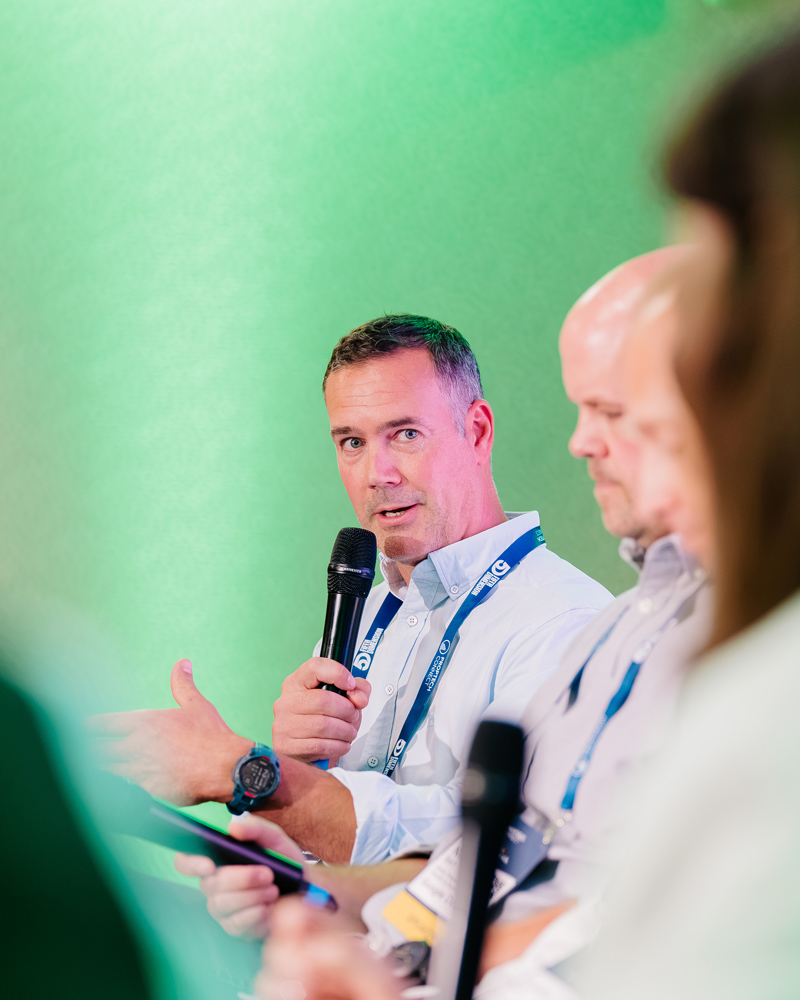
- Charles: Partnership – We can’t do it if we don’t do it together
- Emily: Data – If we don’t track it, we don’t know it
- Andy: Trust – Incredibly important in everything we do
- Edwina: Ecosystem – Being part of something and really buying into it
- Nick: Flexibility and Optionality – This can only come if we have partnership, trust, the data to back up what we are doing, and the knowledge that we are all working towards the same goal.
So, can our industry keep up with the world’s most advanced companies? Sam concluded: “If we do all of these things, I think we can!”