United States

Podcast Episode
Beyond BIM: The Future of Digital Construction
July 31, 2026
What does better information management look like in modern construction? In this episode of Building Conversations, host Harry Lewis, BIM/VDC Leader at Structure Tone Dublin, is joined by Ryan Ford, BIM Manager at Structure Tone Dublin, and Davitt Lamon, Head of BIM at the National Standards Authority of Ireland (NSAI), for a deep dive into BIM, ISO 19650, and the evolving role of digital construction. From Structure Tone Ireland’s journey to ISO 19650 certification to the wider impact of Ireland’s BIM mandate, the conversation explores how standardized information management is transforming project delivery.
Key Takeaways
- BIM is fundamentally about information management—not just 3D models.
- Successful BIM implementation relies on the balance of people, process, and technology.
- ISO 19650 provides a structured framework for creating, managing, and sharing project information.
- Many organizations are already practicing elements of ISO 19650 without realizing it.
- Ireland’s BIM mandate is driving greater consistency and digital maturity across the construction sector.
- Certification offers independent validation of an organization’s information management capabilities.
- Standardized processes improve collaboration, transparency, and project outcomes.
- Bringing digital tools directly to site teams increases adoption and maximizes project value.
- The industry is shifting from information production to information management—and increasingly to data analytics.
- Better information leads to fewer RFIs, improved decision-making, and reduced project risk.
- AI has the potential to accelerate information management and automate repetitive workflows while supporting, not replacing, human decision-making.
- Education, training, and continuous upskilling remain critical to digital construction success.
Highlights In This Episode
The panel explains why BIM is fundamentally about information management—not just 3D modeling—and why standardized digital processes are becoming essential across the construction industry.
Ryan Forde shares how Structure Tone Ireland built its BIM function in-house, secured organizational buy-in, and developed scalable processes that led to ISO 19650 certification.
Davitt Lamon discusses how many organizations are already performing elements of ISO 19650 without realizing it, and why understanding the language of the standard is often the biggest hurdle.
The group explores how Ireland’s BIM mandate is driving consistency across public sector projects through information management, open data standards, classification systems, and lifecycle thinking.
Ryan outlines the 13-month process of preparing for certification, treating ISO 19650 as an “instruction manual” for creating, managing, and sharing project information.
Davitt explains how requirements differ for clients, contractors, consultants, and subcontractors—and why understanding your role makes ISO 19650 far more approachable.
The discussion examines proposed updates to the standard, including simplified language, reduced reliance on BIM acronyms, and a stronger focus on asset operations and lifecycle management.
The panel discusses how universities and training programs are helping build a new generation of construction professionals who understand digital construction and information management.
The conversation explores the challenge of defining the right level of information—avoiding both missing critical data and over-specifying deliverables that create unnecessary cost and waste.
Ryan explains how cloud-based platforms and mobile devices put live project information directly into the hands of field teams, improving access, collaboration, and decision-making.
Davitt shares how organizations often find the certification process itself valuable because it helps them better understand their own workflows, strengths, and opportunities for improvement.
The discussion draws connections between ISO 19650 and Lean Construction principles, highlighting how both approaches focus on reducing waste, improving collaboration, and increasing efficiency.
Ryan describes how interactive 3D models and cloud-based visualization helped clients better understand projects during pursuits and contributed to successful project wins.
The group discusses how increased model coordination and better information management reduce requests for information, streamline workflows, and lower project risk.
Ryan explains how dashboards, analytics, and structured data are helping teams monitor project health, improve transparency, and drive more informed decisions.
Davitt discusses emerging concepts such as digital product passports, digital building logbooks, lifecycle data management, and model-based regulatory approvals.
The panel explores AI as a productivity tool that can assist with analysis, automation, and data management while still relying on human expertise and decision-making.
Ryan outlines the company’s approach to information management, model coordination, laser scanning, photogrammetry, site technology, and continuous workforce development.
The conversation closes with a look at emerging certifications, competency frameworks, and the growing demand for information management skills across all areas of the construction industry.
Closing Summary
In this episode of Building Conversations, the guests explore how BIM and ISO 19650 are reshaping the way construction teams create, manage, and share information. The conversation highlights the practical realities of implementing information management processes, from achieving certification and supporting industry-wide adoption to empowering site teams with accessible digital tools. Along the way, the panel emphasizes that BIM is not simply about technology, it is about creating better outcomes through collaboration, consistency, and clearer communication. Looking ahead, emerging technologies such as AI, advanced analytics, and digital product passports are poised to further transform the industry. But regardless of the tools involved, one theme remains constant: better information leads to better decisions, better projects, and a stronger future for construction.
Host


Harry Lewis
BIM/VDC Leader
Structure Tone Dublin
Harry Lewis is a BIM Lead and Autodesk Certified Trainer who has worked as a strategic, tactical and operational BIM Consultant and Coordinator for a variety of small, medium to large scale projects while concurrently providing organizational support, implementing best practice BIM approaches to create resilient and effective organizational BIM implementation strategies and procedures. Lewis lectures on BIM & Digital Construction at the Belfast Metropolitan College and the Zigurat Institute’s Global BIM Management Programme alongside fellow ArcDox Staff.
Guests


Ryan Forde
BIM Manager
Structure Tone Dublin
Ryan Forde is a BIM Manager at Structure Tone Dublin, bringing experience from previous roles at Technological University Dublin, ARCDOX, and Hussey Architects. Ryan Forde holds a 2017 – 2020 MSc in Applied Building Information Modelling and Management in Building Information Modelling at Technological University Dublin.
Davitt Lamon
Head of BIM
National Standards Authority of Ireland
As Head of Building Information Modelling (BIM) at the National Standards Authority of Ireland, Davitt Lamon leads work on BIM standards and certification to support digital construction across Ireland. My background spans industry, academia and research — from leading digital construction and information management in practice to lecturing in BIM, construction and data analytics at Technological University Dublin.
Lamon holds an MSc in BIM & Management, a Postgraduate Certificate in Digital Construction Analytics, and I’m currently undertaking PhD research focused on BIM and information management roles and competencies.
Similar Episodes

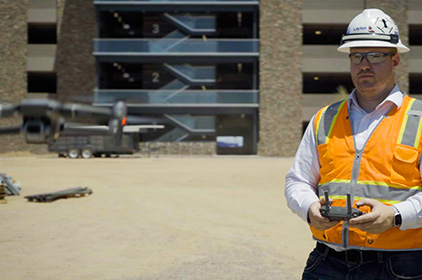
Next-Level Building: Drones, AI, and Reality Capture

How is reality capture technology changing the way we build? Join Greg Dunkle, STO Building Group (STOBG)’s Chief Operating Officer, Jon Ferguson, Vice President of Virtual Design and Construction at Layton Construction, Austin Lay, Senior VDC Manager at Layton Construction, and James Pipe, Chief Product Officer at Drone Deploy as they explore how tools like drones, 360 cameras, and AI are transforming project accuracy, documentation, and data management on today’s jobsites.
Listen Now
Layton’s Approach to VDC
The demand for BIM and VDC solutions is growing stronger every day—and builders need to continue to innovate and evolve to keep up. Join Public Relations Manager, Bryan Packer, as he discusses Layton Construction’s unique approach to BIM and VDC with the company’s virtual design and construction team: Jeff Metcalf, Vice President of Information Systems, Jon Ferguson, Director of Visualization, and Tim McLachlan, Director of BIM.
Listen Now