
Trusting in timber: what commercial tenants should consider in hybrid CLT buildings
By Cam Hummerston, Divisional Director, Structure Tone
Mass timber is on the rise in commercial real estate; we explore how occupiers can incorporate this sustainable building typology into their operational strategy and maximise its benefits.
The current carbon context
Shifting political attitudes to ESG have changed how organisations talk about sustainability publicly, but not whether they act on it.
BSI’s 6th annual Net Zero Barometer found 79% of UK business leaders will still pursue net zero regardless of the political landscape, and over 13,800 companies have now signed the Science Based Targets initiative. The trend BSI calls “climate coding”, which is reframing net zero around resilience and business continuity rather than environmental impact alone, means the building a company chooses to occupy remains a live strategic decision, even if the language around it is changing.
That’s reflected in leasing activity: Savills reports that 81% of commercial space acquired in central London in Q1 2026 was Grade A.
What’s timber got to do with it?
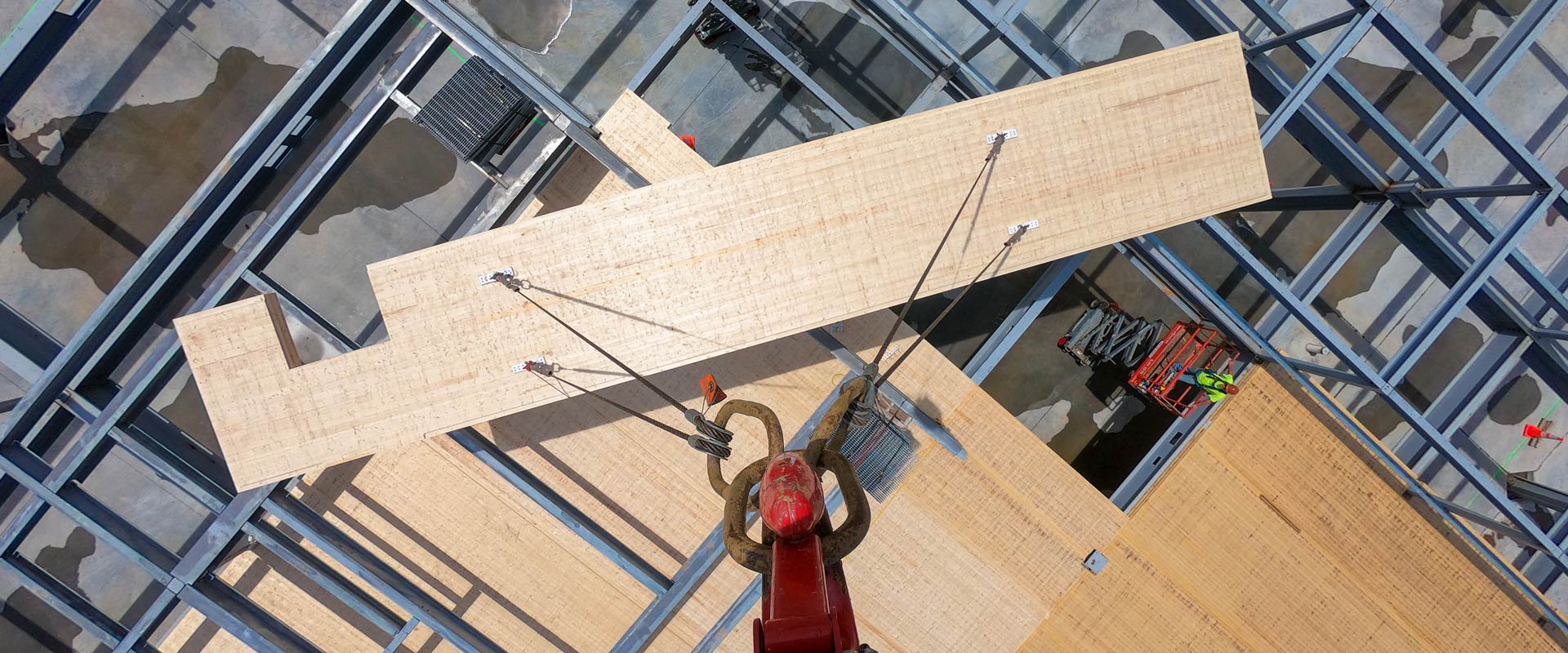
This is where mass timber has a growing role to play. It reduces embodied carbon by 20–60% compared with traditional construction, and steel or concrete hybrid cross laminated timber (CLT) delivers the column-free spans and higher floor-to-ceiling heights that timber alone can’t achieve. That combination gives tenants both a lower-carbon building and floorplates that can flex as headcount, layout or working patterns change. Mass timber can also be designed for disassembly, so a building and its interiors can be easily adapted, repairs can be efficiently dealt with, and materials can ultimately be reused or recycled at end of life.
Beyond environmental benefits
There’s a wellbeing case too. One recent study recorded a measurable reduction in cortisol, the stress hormone, among office workers who moved from a concrete office into a timber-rich one, while employees in a second study reported better energy, focus, and team collaboration. These physiological and psychological responses to timber, and natural materials in general, is known as Biophilia – our innate human affinity for and response to nature.
Setting tenants up for success
Hybrid CLT is a great option that offers more than just sustainability benefits, but it doesn’t come without consideration. Supporting tenants moving into mass timber buildings requires a contractor team that has a deep understanding of the technical complexities associated with it, and specifically how the base build structure impacts the outcome of the office fit out.
Fire, moisture, and damage are top three risks to be aware of:
- Mass timber is designed to char rather than collapse, but how different types behave in a fire, e.g. delamination, needs to be properly understood. A contractor should undertake a comprehensive validation of existing fire protection measures and have a detailed understanding of the fire strategy and Building Regulations.
- Moisture damage caused by precipitation during construction, poor water management on site, and leaks once occupied, can lead to surface staining, fungal decay, mould, and even significant structural damage. A robust and proactive water management strategy is essential to reduce moisture exposure through the entire construction process.
- During occupation, moisture detection systems are key. Tenants should utilise Building Management Systems, Operation and Maintenance Manuals, and routine visual checks, rather than just relying on annual inspections.
- Methodologies should incorporate stringent hot works controls, particularly during the installation of high-level services, as burn damage from tools used in soldering or welding can permanently affect the aesthetics of exposed timber ceilings.
- Exposed services, systems routing, and testing holes will impact the look and long-term adaptability of the ceiling material. Particular attention needs to be paid to areas that add plumbing, which is more complicated to route. Early and close collaboration with subcontractors is essential to address these aspects of the construction process.
Structure Tone’s Mass Timber expert, Peter Kobelt advises that the construction history is worth investigating: “Talk to the installer, they will know the building better than anyone. They will tell you if the install went well, if there were any particular challenges, and specifics about moisture content measurement.”
Delivering differently with hybrid CLT
Managed well, hybrid CLT gives tenants a lower-carbon, more adaptable workplace that flexes with their business over the life of a lease. Managed poorly, those same features can just as easily be compromised. The difference comes down to appointing a delivery partner who understands mass timber’s technical complexity as thoroughly as its benefits.