
- Material circularity is most effective when it is considered during preconstruction, while design decisions are still flexible and teams have time to identify salvage opportunities.
- Pre-demolition salvage assessments help project teams understand what materials are available, document existing conditions, and identify potential reuse, take-back, or recycling pathways before work begins.
- Embodied carbon has become a much larger driver of design and construction decisions, with more clients, institutions, municipalities, and rating systems incorporating embodied carbon goals and requirements.
- Circularity requires a more flexible approach to design and specification, particularly because reclaimed materials are not always available in predictable quantities or at predictable times.
- Specifications can help move circularity from an aspiration to a requirement by clearly identifying materials that cannot be landfilled, requiring site separation, and incorporating manufacturer take-back or salvage requirements.
- Technology can support material identification and documentation, but the industry still lacks a sophisticated, widely adopted system for tracking available reclaimed materials across their lifecycle.
- Reclaimed wood, furniture, doors, insulation, flooring, and gypsum wallboard are among the materials currently showing stronger potential for reuse or closed-loop recycling.
- Strong collaboration among owners, designers, contractors, subcontractors, manufacturers, reuse vendors, and material processors is essential to making circular strategies practical.
- Circularity can create both environmental and financial value, including reducing landfill costs, lowering tipping fees, supporting carbon-reduction goals, and improving waste diversion.
- Policy, incentives, storage infrastructure, and stronger reuse markets will be critical to making deconstruction and material circularity standard practice in Boston and beyond.
Andrea explains how early design and preconstruction allow teams to identify available reclaimed materials, explore salvage opportunities, and keep enough flexibility in the design to incorporate them.
Michael discusses the value of a longer preconstruction runway and early pre-demolition salvage assessments that identify finishes, furniture, fixtures, and materials that can potentially avoid landfill altogether.
The process can include site walks, photography, inventory documentation, manufacturer identification, and hands-on evaluation of existing materials before presenting opportunities back to the owner and design team.
Growing awareness of embodied carbon, evolving client sustainability standards, local regulatory activity, and green building programs are all increasing pressure to reduce the carbon impact of building materials.
Andrea explains how LBC and LBC Core push projects beyond conventional sustainability requirements and can create direct requirements for reclaimed materials and embodied carbon reduction.
Michael cites estimates that only a small percentage of materials that could potentially be salvaged are currently recovered, highlighting the significant opportunity for improvement across the industry.
Michael discusses tools such as 360-degree site imaging that can improve documentation and help reuse vendors understand available materials, while also noting the lack of a robust industry-wide material tracking system.
Andrea explains why traditional product-specific specifications can make reuse difficult and why teams may need to focus more on performance, design intent, and flexibility around what materials become available.
Michael discusses construction waste requirements, site separation, diversion verification, manufacturer take-back programs, and the importance of removing vague language such as “if feasible” or “if possible.”
The guests discuss reclaimed wood, insulation, doors, furniture, flooring, gypsum wallboard, and other materials where reuse or recycling markets are beginning to mature.
The conversation highlights the need for alignment among clients, designers, contractors, subcontractors, manufacturers, reuse vendors, and processors throughout the project lifecycle.
The guests point to stronger policy, deconstruction requirements, incentives, storage infrastructure, and changes to how buildings are designed and delivered.
Andrea describes the current “chicken-and-egg” problem: designers hesitate to specify salvaged materials because supply is uncertain, while materials are not always salvaged because demand is uncertain.
Michael explains the need for stronger connective infrastructure between demolition, deconstruction, storage, reuse markets, and new construction so recovered commercial materials have somewhere reliable to go.
In this episode of Building Conversations, Jennifer Taranto, Vice President of Sustainability at STO Building Group (STOBG), is joined by Michael Orbank, Sustainability Manager supporting Structure Tone Boston, New Jersey, Philadelphia and Pavarini Northeast, and Andrea Love, Principal and Director of Building Science at Payette, to explore how material circularity is evolving in the Boston construction market. The conversation looks at why circularity needs to begin during preconstruction and design, when teams have the greatest ability to assess existing materials, identify salvage opportunities, and incorporate reuse into project requirements. The guests discuss how embodied carbon goals, rating systems, client expectations, and emerging regulations are pushing the industry toward more thoughtful material strategies. They also examine the practical challenges that remain, including inconsistent salvage markets, limited storage, inflexible specifications, underdeveloped material-tracking tools, and the need for stronger collaboration across the entire project team. Ultimately, the discussion highlights how clearer requirements, stronger partnerships, better infrastructure, and supportive policy could help move material circularity from a project-by-project initiative toward standard industry practice.
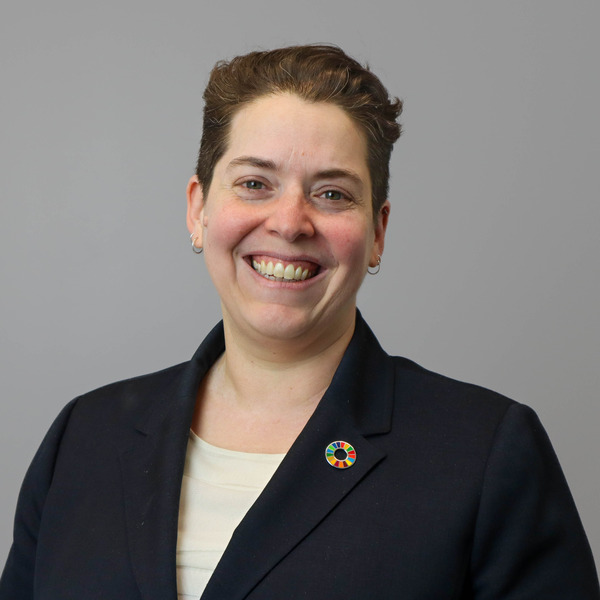

With over two decades of experience shaping the commercial real estate and construction industry, Jennifer Taranto has become a driving force in sustainable innovation. Since joining Structure Tone in 2001, she’s worn many hats—superintendent, project manager, and now Vice President of Sustainability for STO Building Group (STOBG)—blending hands-on expertise with visionary leadership.
In her current role, Jennifer is rewriting the playbook for sustainability in construction. She ensures that Corporate Social Responsibility (CSR) principles aren’t just box-ticking exercises, but transformative strategies woven into client projects and STOBG’s organizational DNA. From navigating complex climate regulations like California’s Climate Rules and the EU’s Corporate Sustainability Reporting Directive (CSRD) to championing voluntary reporting through platforms like CDP, EcoVadis, and SBTi, Jennifer’s impact reaches far beyond compliance.
Jennifer is most in her element when collaborating with clients to embed sustainability from the ground up—literally. Whether it’s reducing environmental footprints, enhancing occupant well-being, or creating innovative roadmaps to achieve bold CSR goals, her work consistently sets new industry benchmarks.
Beyond her corporate role, Jennifer is a founding member of Built Environment Plus, a nonprofit advancing the green building sector, where she now serves as Chair of the Board. A recognized thought leader and sought-after speaker, she has earned accolades such as the WELL AP and WELL Faculty Awards, underscoring her global impact.
Jennifer holds a Bachelor’s in Construction Engineering and Management from North Carolina State University, but her true expertise lies in bridging the gap between visionary ideals and tangible, measurable impact.

Michael Orbank is the Sustainability Manager for the Northeast region at STO Building Group (STOBG), overseeing projects in Massachusetts, Connecticut, New Jersey, and Philadelphia. A passionate advocate for circularity and zero waste, he works to reduce the carbon footprint and environmental impacts of construction and demolition through sustainable innovation, waste diversion pilot programs, and strategic partnerships with product manufacturers and industry stakeholders.
Michael chairs the Carbon Leadership Forum of Boston’s Reuse/Deconstruction Group and supports regional building material reuse non-profits, driving the development of deconstruction and reuse infrastructure to advance decarbonization and sustainable practices across the built environment. A recognized thought leader, he holds LEED and WELL AP credentials, is a PHIUS Builder, and a TRUE Advisor. Michael sees the commercial construction sector as a critical arena for combating the climate crisis and is dedicated to pushing it toward a cleaner, more sustainable future.

As a Building Scientist, Andrea’s interests are in pushing the performance and minimizing the environmental impact of her projects. She also enjoys building the firm’s knowledge and intuition about sustainability through research endeavors and project explorations.
At PAYETTE, Andrea works across projects to bring rigor to the performance of projects. She integrates performance modeling tools into PAYETTE’s design process at the very beginning to inform and push designs. Additionally, she leads a number of internal research projects, and was the Principal Investigator on the 2012 AIA Upjohn Research Initiative-funded “Thermal Performance of Facades,” a research project focused on thermal bridging. She also leads the firm’s efforts on the AIA 2030 Commitment, tracking and benchmarking the performance of projects across the firm.
Andrea received a Master of Science in Architecture Studies in Building Technology from the Massachusetts Institute of Technology, where she was the recipient of the Tucker-Voss Award and focused her thesis on the thermal performance of facades. She is also a Lecturer at MIT in the Department of Architecture’s Building Technology group where she teaches a class on building envelope performance. She currently serves on the Board of Directors for the USGBC Massachusetts Chapter, as well as the national USGBC Chapter Steering Committee and Education Steering Committee, and is a member of the COTE Advisory Group to the Board. Andrea was elected to the College of Fellows of the American Institute of Architects (FAIA) in 2023.
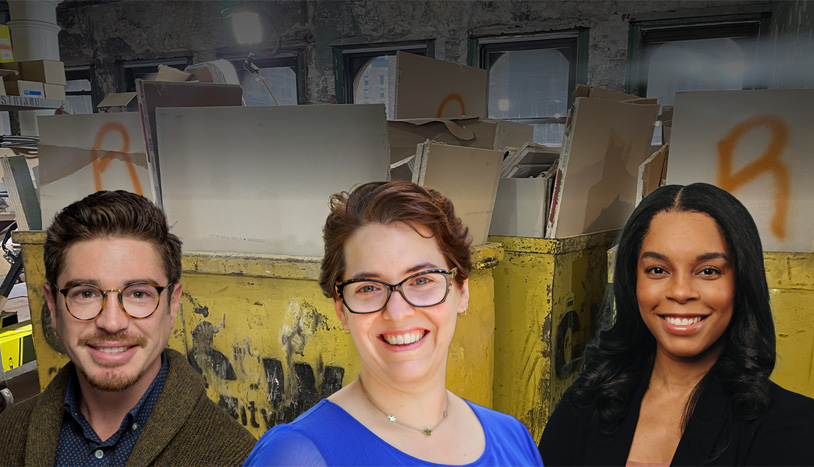
In honor of Zero Waste Week, join Jennifer Taranto, VP of Sustainability at STO Building Group (STOBG), Ryan Hughes, Sustainability Manager at Structure Tone New York, and Tiffany Williams, Sustainability Manager at Rudin, as they explore how selective deconstruction, material recovery, and take-back programs are transforming NYC construction.
Listen Now

How can the construction industry shift from a “take, make, waste” cycle to a circular economy? In celebration of Zero Waste Week, host Jennifer Taranto, VP of Sustainability at STO Building Group (STOBG) is joined by Tim Conway, VP of Sustainability at Shaw Industries, and Avery McKitrick Sustainability Coordinator to explore how takeback programs and supplier partnerships are transforming waste management on job sites.
Listen Now