
- Takeback programs can help construction teams reduce landfill waste by returning materials to manufacturers for recycling or reuse, supporting a more circular approach to building materials.
- Successful takeback programs need to be profitable, practical, purposeful, and built around strong partnerships among manufacturers, contractors, owners, designers, and trade partners.
- Cost remains one of the biggest perceived barriers, but takeback programs should be compared against the full cost of traditional disposal—including dumpster rentals, tipping fees, transportation, and labor. In some markets, takeback can result in cost savings or be comparable to conventional disposal.
- Manufacturer programs are becoming more accessible as minimum quantities decrease, distribution networks improve, and dedicated recycling specialists help project teams coordinate material recovery.
- Takeback programs can support client waste-diversion and carbon-reduction goals while helping bridge the gap between ambitious sustainability targets and existing recycling infrastructure.
- Carpet tile is one of the most established materials for takeback, but similar opportunities are growing for ceiling tile, furniture, porcelain tile, rubber flooring, resilient flooring, and other building products.
- Circularity should be considered as early as possible, beginning with material specification and continuing through preconstruction, procurement, demolition, and deconstruction planning.
- Clear specification language can turn recycling and takeback from an aspiration into a project requirement by identifying materials early and incorporating reclamation into project bids and scopes.
- Education remains essential because many owners and project teams may have sustainability or recycling goals without realizing that manufacturer takeback programs can help them achieve those goals.
- Scaling circularity will require the industry to rethink traditional demolition, expand deconstruction expertise, strengthen regional material aggregation, and make takeback programs part of standard construction practice.
Tim introduces the principles behind Shaw’s approach to circularity: takeback programs need to be profitable, practical, and purposeful. He explains why designing products with their end of life in mind can turn recovered materials into valuable raw materials rather than waste.
Tim adds a fourth “P”—partnerships—and explains how collaboration with contractors like Structure Tone helps manufacturers connect with the teams actually executing demolition and material recovery on construction projects.
Avery discusses the enormous volume of waste generated by the building industry and how takeback programs can help bridge the gap between increasingly ambitious municipal and client diversion goals and the recycling infrastructure currently available.
Avery identifies volume requirements and cost as two common challenges, including freight, labor, sorting, palletizing, and deconstruction. However, she explains that avoided landfill tipping fees can help offset some of those costs.
Tim challenges teams to compare takeback costs with the full cost of sending materials “away,” including dumpsters, transportation, tipping fees, and labor. He argues that the industry sometimes confuses doing something differently with doing something harder.
Tim explains how Shaw has lowered its carpet takeback minimum from 500 yards to 100 yards, leveraged its distribution network for reverse logistics, and added dedicated recycling specialists to make participation easier for projects of different sizes.
Avery shares an example from a corporate campus project in Arkansas, where installation scraps from carpet tile are being collected, palletized, and returned for recycling. She explains how collaboration among Structure Tone Southwest, Layton, Shaw, and the flooring subcontractor helped make the program possible.
Tim shares that the Arkansas project had already collected approximately 16,000 pounds of waste midway through the effort, demonstrating how asking the right questions and bringing project partners together can produce measurable results.
Beyond carpet tile, Avery highlights ceiling tile, furniture, porcelain tile, rubber flooring, and other flooring products as materials with growing takeback opportunities, particularly when recycling can reduce the impact of high-embodied-carbon products.
Tim discusses sharing best practices across building-product manufacturers and applying lessons from carpet recycling to other product categories, including resilient flooring designed so recovered material can be recycled back into new products.
Avery argues that circularity should begin when materials are first specified. Selecting products with takeback programs can create future recovery opportunities, while early planning around demolition and deconstruction can help ensure materials are properly separated, palletized, and returned.
Tim explains why teams should identify recycling opportunities before materials are bid and incorporate reclamation requirements directly into project specifications. When takeback becomes part of the bid, it becomes part of the project rather than an optional sustainability goal.
Tim discusses how corporate, higher education, and healthcare clients increasingly have recycling, climate, and carbon goals—even if they do not always realize manufacturer partnerships can help achieve them. Documenting landfill diversion and associated carbon reductions can help demonstrate the value of these programs.
Avery explains that many clients are interested in takeback programs once they understand what is possible. Sometimes the biggest step is simply having someone on the project team raise the opportunity and start the conversation.
Tim looks ahead at how extended producer responsibility regulations, stronger industry participation, and professionals bringing sustainability values into their work could help expand circularity across flooring, ceiling tile, glass, drywall, and other building materials.
Avery describes a future where demolition is increasingly replaced by thoughtful deconstruction, allowing materials to be recovered for takeback, recycling, or reuse rather than removed as quickly as possible and sent to landfill.
Jennifer highlights an opportunity for trade partners to serve as regional material aggregators, collecting recovered materials from multiple projects so they can be transported back to manufacturers more efficiently and at greater scale.
In this episode of Building Conversations, Jennifer Taranto, Vice President of Sustainability at STO Building Group (STOBG), is joined by Avery McKitrick, Sustainability Coordinator at Structure Tone Southwest, and Tim Conway, Vice President of Sustainability at Shaw Industries, to explore how manufacturer takeback programs and industry partnerships are helping advance material circularity in construction. The conversation examines why takeback programs are gaining momentum and what it takes to make them practical on real projects. The guests discuss common challenges—including cost, material volumes, logistics, and perceptions around added complexity—and how manufacturers and project teams are adapting programs to make participation easier. They also share lessons from an ongoing corporate campus project in Arkansas, where collaboration among the contractor, manufacturer, trade partners, and sustainability teams has already diverted thousands of pounds of carpet waste from landfill. The discussion also looks at how circularity can expand beyond carpet to materials such as ceiling tile, furniture, porcelain tile, resilient flooring, and other building products. Jennifer, Avery, and Tim emphasize the importance of identifying opportunities early, incorporating takeback requirements into specifications and bids, and educating owners and project teams about the environmental and financial value these programs can provide. Ultimately, the episode highlights how stronger partnerships, earlier planning, clearer project requirements, expanded deconstruction practices, and better material-recovery infrastructure can help move manufacturer takeback programs from individual sustainability initiatives toward business as usual across the construction industry.


With over two decades of experience shaping the commercial real estate and construction industry, Jennifer Taranto has become a driving force in sustainable innovation. Since joining Structure Tone in 2001, she’s worn many hats—superintendent, project manager, and now Vice President of Sustainability for STO Building Group (STOBG)—blending hands-on expertise with visionary leadership.
In her current role, Jennifer is rewriting the playbook for sustainability in construction. She ensures that Corporate Social Responsibility (CSR) principles aren’t just box-ticking exercises, but transformative strategies woven into client projects and STOBG’s organizational DNA. From navigating complex climate regulations like California’s Climate Rules and the EU’s Corporate Sustainability Reporting Directive (CSRD) to championing voluntary reporting through platforms like CDP, EcoVadis, and SBTi, Jennifer’s impact reaches far beyond compliance.
Jennifer is most in her element when collaborating with clients to embed sustainability from the ground up—literally. Whether it’s reducing environmental footprints, enhancing occupant well-being, or creating innovative roadmaps to achieve bold CSR goals, her work consistently sets new industry benchmarks.
Beyond her corporate role, Jennifer is a founding member of Built Environment Plus, a nonprofit advancing the green building sector, where she now serves as Chair of the Board. A recognized thought leader and sought-after speaker, she has earned accolades such as the WELL AP and WELL Faculty Awards, underscoring her global impact.
Jennifer holds a Bachelor’s in Construction Engineering and Management from North Carolina State University, but her true expertise lies in bridging the gap between visionary ideals and tangible, measurable impact.

As Vice President of Sustainability at Shaw Industries, Tim Conway has changed the company’s attitude toward sustainability – namely that this goal, is a collective responsibility. Tim is focused on the positive effects that sustainable flooring products have on our buildings, and more importantly, the people that occupy and live in the spaces we design. For over 10 years, Tim has been at the forefront of educating and promoting Shaw’s Cradle-to-Cradle certifications, Declare Labels, Health Product Declarations, and Environmental Product Declarations.

Avery McKitrick is the Sustainability Coordinator for Structure Tone Southwest, supporting STO Building Group (STOBG)’s western region, including Layton and Abbott. In this role, Avery focuses on bridging complex, interdisciplinary sustainability principles with technical expertise to drive meaningful outcomes on construction projects. With a degree in Environmental Science from the University of Texas at Austin and over four years of experience in the sustainability field, Avery brings both academic grounding and practical knowledge to her work. Her background in operational sustainability informs her approach, enabling her to apply proven strategies to the unique challenges of the construction industry. Passionate about advancing sustainable practices, Avery is dedicated to helping teams integrate environmental responsibility into every stage of the building process.
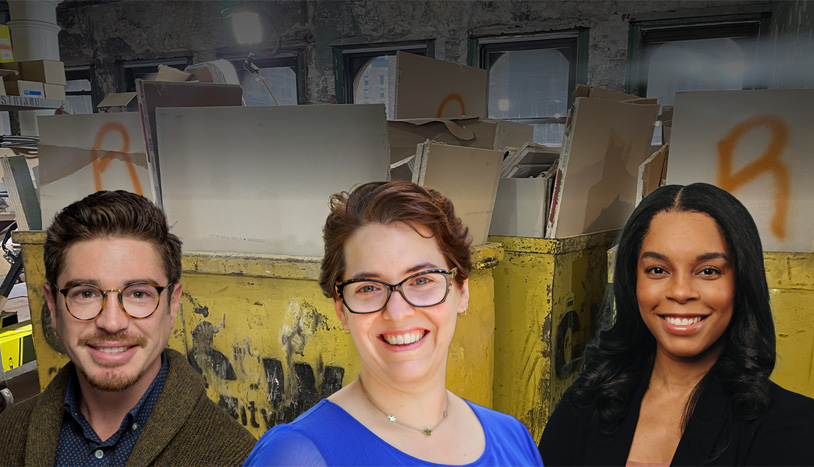
In honor of Zero Waste Week, join Jennifer Taranto, VP of Sustainability at STO Building Group (STOBG), Ryan Hughes, Sustainability Manager at Structure Tone New York, and Tiffany Williams, Sustainability Manager at Rudin, as they explore how selective deconstruction, material recovery, and take-back programs are transforming NYC construction.
Listen Now
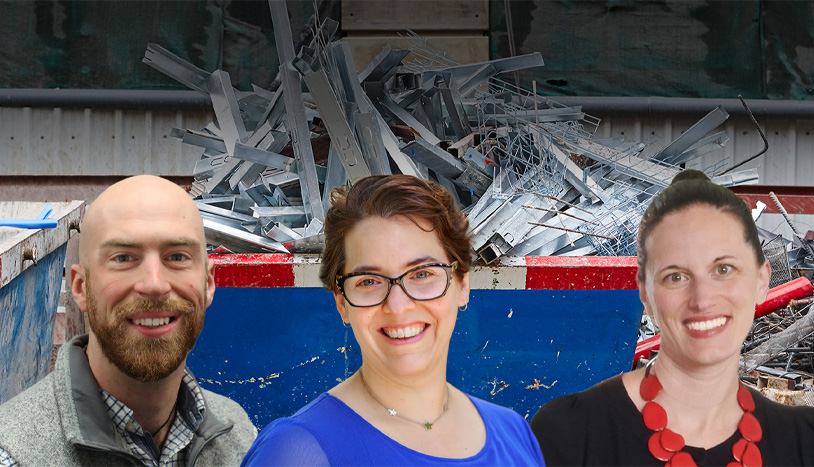
In celebration of Zero Waste Week, join Jennifer Taranto, VP of Sustainability at STO Building Group (STOBG), Michael Orbank, Sustainability Manager, Northeast Region at STO Building Group (STOBG), and Andrea Love, Principal and Director of Building Science at Payette, as they explore how Boston teams are turning demolition into deconstruction—leveraging partnerships across owners, designers, contractors, and vendors while navigating policy, storage, and market challenges.
Listen Now